Posts

Showing posts with the label litigation

New Guide to the Intellectual Property Enterprise Court Small Claims Track

Image
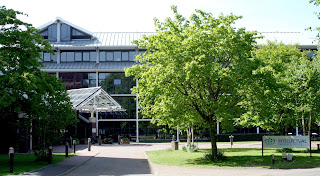
Manchester Civil Justice Centre, Home of  the Small Claims Track Author Skip88   Public Domain   Source  Wikimedia Commons   Jane Lambert Yesterday, HM Courts and Tribunal Service published a Guide to the Intellectual Property Enterprise Court Small Claims Track  and a glossary of  Common legal terms used in the Intellectual Property Enterprise Court .   It aims to help users and potential users of the Intellectual Property Enterprise Court ("IPEC") small claims track by giving practical tips.  Although it is primarily intended for litigants in person, intellectual property practitioners will also find it useful.  The guide is divided into the following sections: Introduction About the IPEC and the Small Claims Track How to decide if a claim is suitable for the IPEC Small Claims Trac k What to expect in your dealings with the court     What to do before issuing a claim     The procedure for claims in the IPEC Sma...

Latest Consultation on Standard Essential Patent Licensing

Image
Department for Science, Innovation and Technology Author bryan...   Licence CC BY-SA 2.0   Source Wikimedia Commons Jane Lambert   In Patents: a New Resource Hub on Standard Essential Patents in May and HMG's other Proposals on FRAND Licensing ,  I wrote on 5 March 2025: "A standard essential patent ("SEP") is a patent that has to be worked in order to comply with a technical standard. Organizations that set such standards (known as standards-setting organizations or SSOs) require SEP proprietors to promise to license the use of their patents to businesses that want to make or distribute products that comply with those standards ("implementers") on fair, reasonable and non-discriminatory ("FRAND") terms as a condition for including their patents within the standards." I added that in theory such a condition looks very fair and ought to work very well but in many cases it doesn't.  That is because implementers delay paying fees until a c...

Cambridge IP Law Summer School 2024

Image
Ross Church / Downing College, Cambridge / CC BY-SA 2.0 Jane Lambert The 23rd IP Law Summer School will take place at Downing College, Cambridge between 12 and 16 Aug 2024 and I shall speak on FRAND  and IP Litigation in the English Courts .  I will also chair the sessions on patents  and contentious IP .  In Cambridge IP Law Summer School   I described the course as "a rare opportunity to listen to some of the leading practitioners in intellectual property law in beautiful surroundings in the company of some very bright young men and women from around the world."   This year's summer school promises to be one of the best ever with a revised agenda  and some excellent speakers .  Among this year's new topics Parminder Lally and Debora Dorn of Appleyard Lees will discuss IP and artificial intelligence and a speaker whose name is yet to be announced will talk about geographical indications . The knowledge imparted in the classroom is only ...

Consultation on SEPs and Innovation: The Responses

Image
Shanghai Licence CC9.10   Source Wikimedia Common s   Jane Lambert On 19 Dec 2021, I announced the Intellectual Property Office's consultation on standard essential patents and innovation.   The consultation closed on 1 March 2022 and a Summary of Responses to the Call for Views  has been published.   The summary covers the following topics: Section 1 - The balance of the ecosystem and benefits to innovation and consumers Section 2 - Competition and market functioning Section 3 - Transparency Section 4 – Patent infringement and remedies Section 5 – Licensing of SEPs Section 6 -SEP Litigation A list of respondents appears on page 88 of the summary. They include academics. businesses, law firms. patent attorneys and interest groups.  Contributions came from within the UK and beyond. The IPO seems to have received a wide range of views, some of which diverged widely. In view of the breadth of issues and the divergence of the views on the need for gov...

IPO Consultation on SEPs and Innovation

Image
Intellectual Property Office Crown Copyright 2007 Open Government Licence v3.0   Jane Lambert One of the talks that I gave at the Cambridge IP Law Winter School  was "TMT: A SEP and FRAND Overview".    I did not choose that title so I shall try to explain what I think it means.   "TMT" stands for technology, media and telecoms. TMT is a sector where there has been a lot of litigation about "SEPs".  SEPs are "standard-essential patents", that is to say, patents for inventions that a telecoms equipment manufacturer has to use if it is to implement a technical standard.  Technical standards are set by standards-setting organizations ("SSOs"). An important SSO for mobile communications is the European Telecommunications Standards Institute ("ETSI") .   "FRAND" is short for "fair", "reasonable" and "nondiscriminatory" and refers to the terms on which SEP owners are supposed to license the use...

UPC Ratification Update: July 2017

Image
Jane Lambert In my June UPC Ratification Update 5 June 2017 I wrote: "There is every chance that the Court will open its doors before the end of this year." Famous last words! Two days later the UPC Preparatory Committee wrote that "the previously announced target date for the entry into operation of the UPC, envisaged for December 2017, cannot be maintained" (see   UPC – Timetable Update – June 2017 7 June 2017 UPC website). For once it is not out fault. Even though we are negotiating terms for exiting the European Union (see Brexit Briefing June 2017   30 June 2017 NIPC News) we remain on course to ratify the UPC Agreement well before we go. The last legislative hurdle is the ratification of the Protocol on Privileges and Immunities of the Unified Patent Court  and that will be done by The Unified Patent Court (Immunities and Privileges) Order 2017 a draft of which has been laid before Parliament together with an explanatory memorandum . ...

Intellectual Property Dispute Resolution in the UK

Image
Jane Lambert First Published 2 Nov 2011 JD Supra, Revised 30 Jan 2017 Essentially, there are two ways of resolving any kind of dispute: the parties can agree to settle; or  a third party, such as a judge, arbitrator or hearing officer , imposes a settlement on them.  They are not mutually exclusive. Some issues in a dispute may be settled by one method while other issues may be settled by another. Agreed Settlement There are two routes to an agreed settlement: Direct negotiation between the parties; or Mediation, that is to say, negotiation facilitated by a third party known as “a mediator”. There are also two negotiation strategies, namely positional and principled negotiation. Mediation developed out of principled negotiation. Direct Negotiation P ositional Negotiation:   The parties bargain. One side begins by demanding more than it expects to get while the other offers less than it expects to give. In subsequent exchanges, the pa...

Animated Advice

Image
Embedded pursuant to the standard YouTube Licence Jane Lambert The Intellectual Property Office has recently uploaded a series of videos to its YouTube channel  which are very short but also very useful. The primer is IP Basics: What is Intellectual Property   and it is followed by films on copyrights. designs , patents and trade marks . Although they have been uploaded for some time they do not seem to have been watched by many people which is a pity because they are a lot better than the advice one can expect from most invention promotion companies or even some lawyers and, of course, they are free. The above video on  IP BASICS: Is Intellectual Property important to my business?   has received only 970 views since the 27 Nov 2015 and a large number of those will have have been made by me. I hope this article may attract more viewers for these films. Good though the IPO animations are there are some that have been produced by other organizations that I l...

Maybe we need to think again about the Chancery District Registries and County Courts

Image
Manchester Civil Justice Centre, Wikpedia Commons Jane Lambert In "Success Fees and ATE Premiums in the Patents County Court: Henderson v All Around the World Recordings Ltd " 4 May 2013 NIPC Law, I blogged about Judge Birss QC's decision in  Henderson v All Around the World Recordings Ltd and Another [2013] EWPCC 19 (27 March 2013) where an impecunious singer song writer who had successfully brought proceedings in the Patents County Court for infringement of her performer's rights against a major record label was allowed  £52,484.25 in costs. Had she brought her claim in the Chancery Division she might well have been awarded £232,676.20. One of the reasons why Judge Birss QC would not allow her more was that "a litigant who wishes to recover a reasonable proportion of the totality of his of her legal costs has a clear option available, to litigate in the High Court. In that system none of the problems now faced by the claimant would...